The Superpower Nobody Talks About: Knowing What Not to Do

Howdy.
It’s been a hot minute (like, a very, very long time) since I’ve updated the website, let alone taken the time to write a blog and talk about industry-related things here.
Honestly, the past year or two has been a hot-ass whirlwind. I found myself struggling to figure out who we are and what we want to be as a business. So I stopped. I stepped back and just executed. I didn’t want to be a big agency. I wanted to be big enough to do this full-time with people I enjoy collaborating with every day. Somewhere along the way, though, I became an order-taker.
Recently, I had a moment where I genuinely asked myself whether this was even worth it anymore. It’s panicky holding the livelihood of people you love, respect, and admire in your hands and knowing you can’t let them down. Frankly, I knew I could get a job, make plenty of money, and be just fine. I’ve done that before. And yet, here I am again — in a place where I have the flexibility to be present for my kids before they finish flyin’ the coop, to travel, to create without boundaries, and to make an impact in ways I actually care about. I’m deeply grateful for that.
But that gratitude came with a familiar question (for maybe the 77th time in my career): “What is your value proposition? What do you do that other people don’t? What actually makes you different? And how are you demonstrating value without your entire existence revolving around analytics, insights, and views?"
For years, the answer was just MORE. I did more. I worked harder. I worked longer. I thought bigger. I became capable of a lot of (very) random things because of my work across so many industries. And here’s the thing: a lot of other people can do all of those things, too.
It was in those moments of reflection that I finally figured it out.
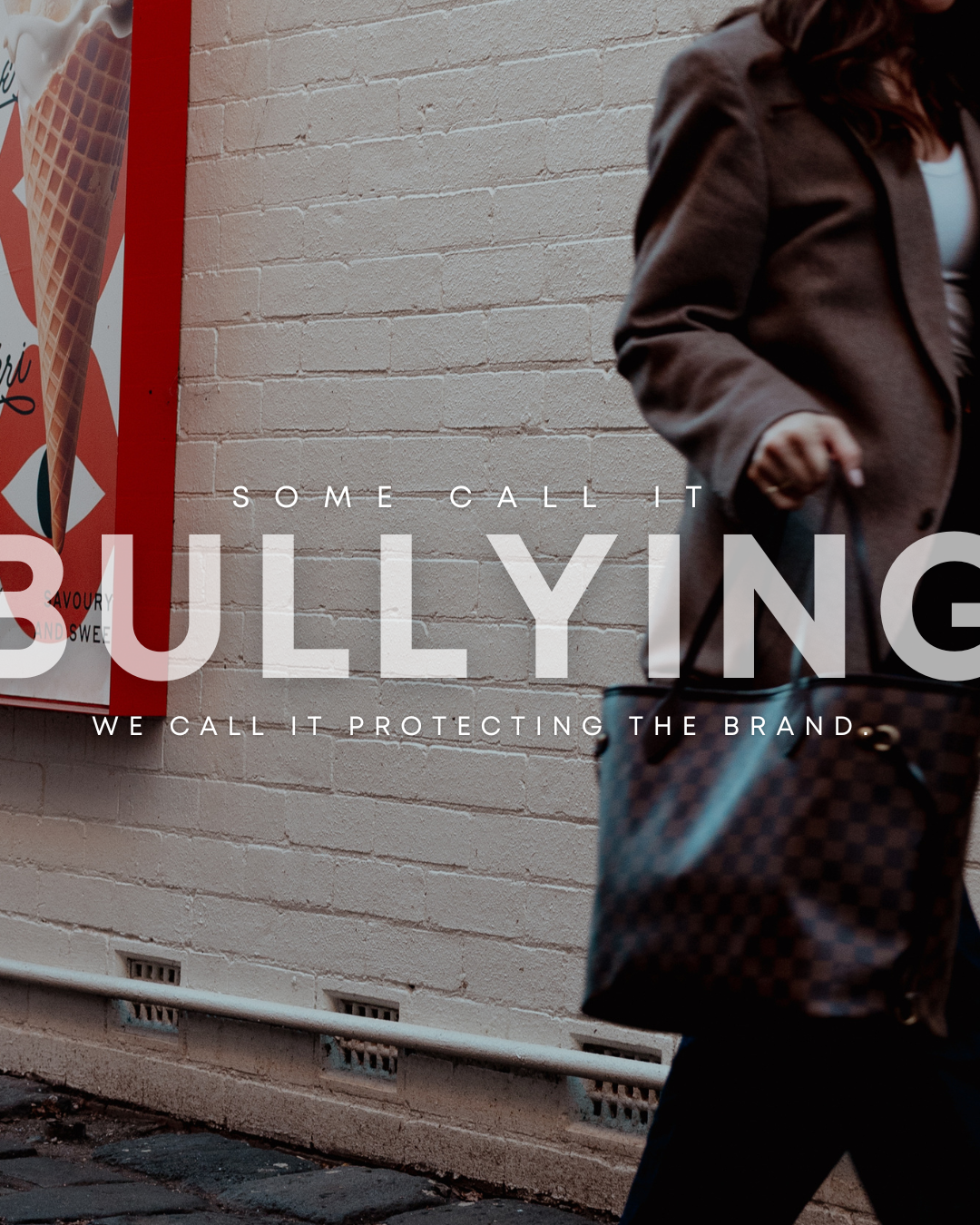
Every now and then, someone calls me a bully.
I usually laugh. Sometimes I pause. And more often than not, it has very little to do with how I say things and everything to do with the fact that I’m willing to say no.
(Before you stop reading, this is not about day-to-day tasks - it’s about strategy and big picture stuff, ok?)
Over the last year or so, I’ve found myself reflecting a lot on who we are as a business. The market feels saturated. Everyone is loud. Everyone is offering the same things in slightly different packaging. And at some point, you’re forced to ask yourself what actually makes you different…and whether you’re still honoring it.
What I realized is that the very thing some people push back on is the thing that has quietly defined our work all along.
Here’s the truth: one of the most valuable things I bring to a brand isn’t creativity.
It’s judgment.
And judgment doesn’t come from trends, templates, or what’s working this week. It comes from time. From losses. From ideas that looked great on paper and fell apart in practice. From watching patterns repeat themselves across industries, markets, and personalities.
I’ve worked across restaurants, real estate, hospitality, finance, retail, and lifestyle brands. Different verticals, different challenges — but the same two things show up every time: people and process.
When either one is ignored, no amount of marketing fixes it.
Experts at the Craft, Not Always the Business
Many of the people we work with are experts at what they do. Chefs. Builders. Designers. Founders. Operators. They’re deeply skilled, passionate, and invested in their craft.
Where things get complicated is when that expertise is expected to automatically translate into marketing, positioning, or growth strategy.
Guess what tho? It doesn’t.
That’s usually when brands start latching onto:
Trends that don’t fit them
Tactics they’re comfortable with, not ones that work
Advice from friends, peers, or social media
Shiny ideas without structure
This is often where I step in and say no.
Not because I enjoy shutting ideas down. But because I’ve seen where they lead.
The Value of Saying No
Saying no is uncomfortable. It’s much easier to say yes to another platform, another campaign, another pivot, another opinion in the room.
But the brands that last aren’t the ones that try everything. They’re the ones that choose intentionally.
They understand:
What fits them
What cheapens them
What distracts them
What actually supports growth
Sometimes my job is protecting a brand from doing something that feels exciting in the moment but ultimately dilutes who they are.
That can feel like friction. It can feel like resistance.
And yes, sometimes it gets labeled as being a bully.
But almost without fail, those same clients are saying something along the lines of “I’m glad we didn’t do that. Thank you for holding the line.”
Taste Is Learned. Restraint Is Earned.
Taste isn’t just about aesthetics. It’s about context.
It’s knowing the difference between what looks good and what actually works. It’s understanding how small decisions compound over time. It’s recognizing when something is interesting versus when it’s effective.
Restraint isn’t about playing it safe. It’s about understanding the cost of excess. You earn it by watching things fail, rebuilding after missteps, and learning how hard it is to regain clarity once it’s lost.
Early on, everyone wants to do everything. With experience, you learn the power of doing the right things.
This Is the Work Beneath the Work
Marketing isn’t just output. It’s alignment. It’s decision-making. It’s knowing when to push and when to pause.
Our most successful client relationships are the ones where we’re trusted to ask uncomfortable questions, challenge assumptions, say no when it’s easier to say yes, and to be both committed to and empowered to protect the brand as it grows.
Those relationships don’t feel flashy. They feel steady. And they last.
It’s why so many of our clients have been with us for over a decade.
We all fam’ around here!
Call It What You Want
If holding boundaries, protecting brand integrity, and steering people away from costly mistakes makes me a bully, I’ll take it.
Because every brand I’ve watched succeed did so not by doing more, but by doing the right things…and by knowing what not to do along the way.
That isn’t negativity. That’s experience.
And it might just be the most underrated advantage a brand can have.
So I guess I’ll stick with this thang.
We’re doing the same work for our clients that we continue to do for ourselves: figuring out who we are, refining what matters, and staying rooted in those differentiators as we grow. That kind of clarity builds trust, and trust builds loyalty.
We’ve made mistakes. We’ve learned the hard lessons. We’ve seen what works, what doesn’t, and what quietly erodes a brand over time. And if we can use our past failures, missteps, and experience to help prevent yours, that’s not criticism. It’s care.
Because authenticity matters. Consistency matters. And protecting what makes a brand different is always worth the effort.
Thanks for coming to my TED Talk. :)
xoxo
- K